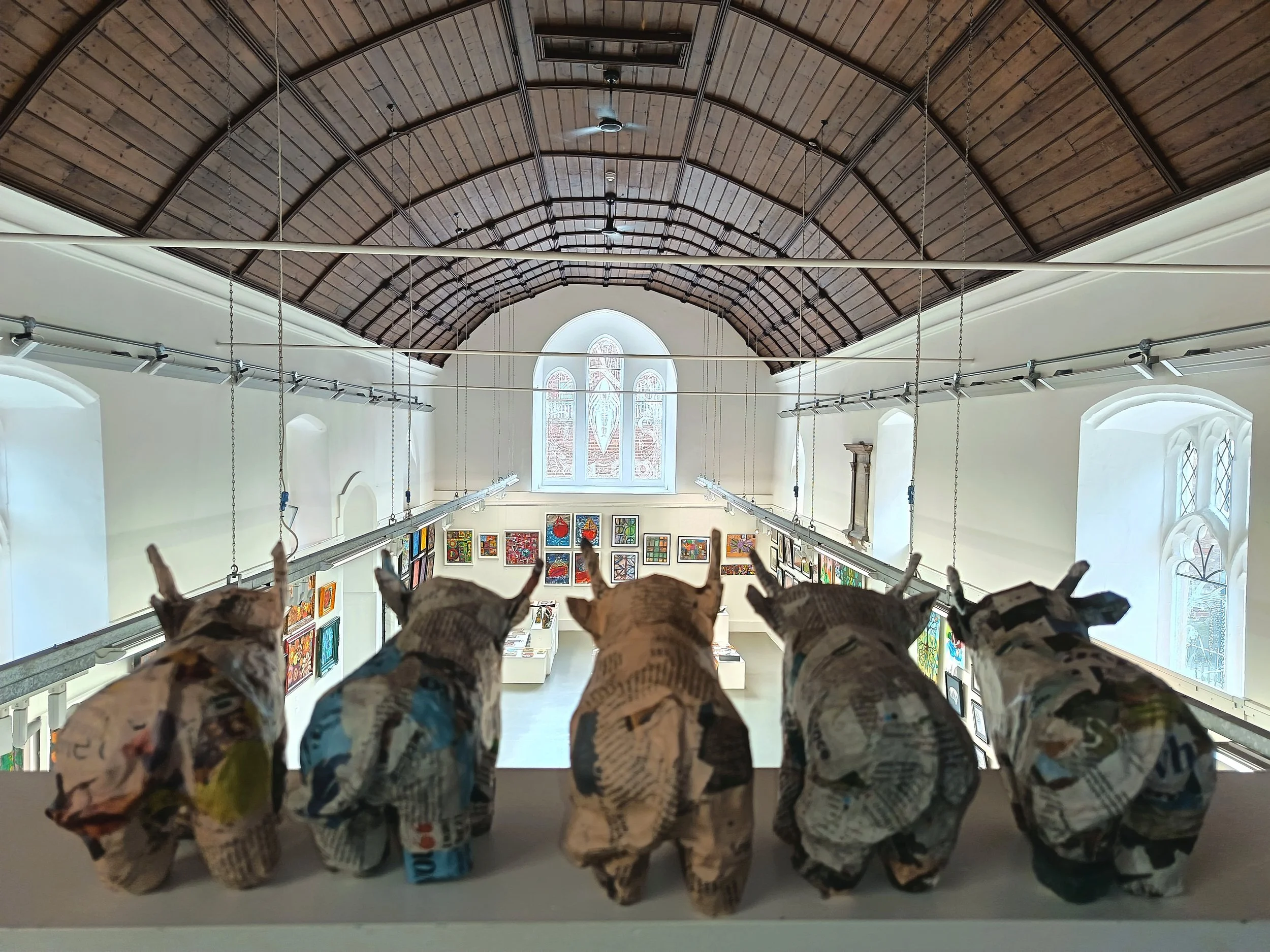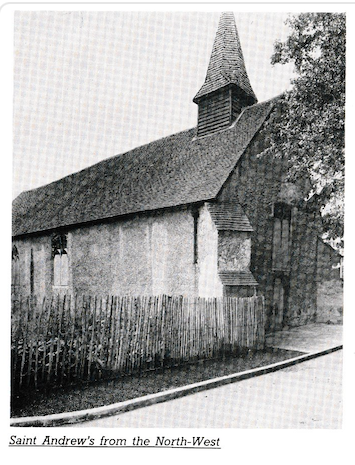
Welcome to Oxmarket Contemporary’s History Blog
Here The History Project Group will post findings from our History Project looking into Oxmarket Contemporary’s past fifty years as a Centre of Arts, as well as the history of the church building that it is in (St Andrew Oxmarket) and the site it sits on.
The History Project Group began in 2024, lead by Rosina Pocknell the Ox’s historian (who has a First-Class BA Hons History degree from the University of Chichester), after the group uncovered the gallery's archives and read West Sussex Record Office Assistant Archivist Alison McCann’s 1978 booklet ‘The History of the Church and Parish of St Andrew Oxmarket Chichester’.
2026 is the fiftieth anniversary of Oxmarket Contemporary, it was decided that it would be great to have an up-to-date version using Oxmarket Contemporary’s miscellaneous files. After two years of research with the help of volunteers (particularly Sue & Lorraine): ‘50 Years a Centre of Arts 800 Years a Church’ was published in June 2026, which can be found in our shop.
In this blog we hope to expand on this project, write about topics we couldn't include in our book further and keep archiving the story of the church/gallery.
If you have any stories and photos of the Oxmarket or past exhibitions, please feel free to contact us so we can record it and maybe share it.
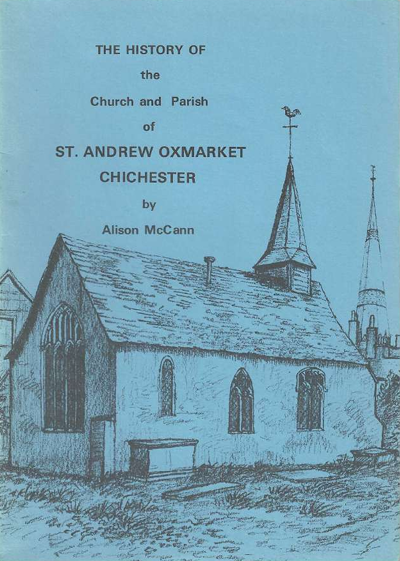
PDF (click here): The History of the Church and Parish of St. Andrew Oxmarket Chichester, by Alison McCann 1978.
Reproduced with the kind permission of the County Archivist, West Sussex Record Office
Answers and Notes from the Question-and-Answer session following The Story of the Bullaker Family: The Lives and Legacies of the Oxmarket’s Prominent Catholic Cicestrians talk – Rosina Pocknell
Thank you to everyone who came to my talk on the Bullaker Family on 14th July 2026.
Four generations of the Bullaker family had links to St Andrew Oxmarket. Mayor John Diggons was buried at St Andrew Oxmarket in 1585. His daughter Elizabeth Diggons married William Bullaker at Chichester Cathedral in around 1570. William Bullaker had many jobs including being a writer, and he became churchwarden of St Andrew Oxmarket in 1576 – even though he had been excommunicated due to his Catholicism the previous year! William and Elizabeth baptised their son John Bullaker at St Andrew Oxmarket in 1574. He became a doctor, teacher, and wrote an early version of a dictionary. John and his wife Ellenor baptised their son Thomas at St Andrew Oxmarket in 1598. This shows how meaningful the Oxmarket was to the Bullaker Family, as by this point, they had to move around a lot due to their persecution. William and Elizabeth died of plague in the 1600s, and Elizabeth was buried at St Andrew Oxmarket. Thomas became a Franciscan Friar, and he was martyred in 1642. Thomas was beatified by Saint Pope John Paul II in 1987. Thomas Bullaker is also known as Blessed John Baptist and Thomas Tailor.
Below are the answers to some of the questions and answers which were asked after the talk:
How old is St Andrew Oxmarket?
The church is around eight hundred years old, we do not have an exact date because surviving records are tricky to find.
Where does the name Bullaker come from?
Bullaker, which is also spelt in the records as Bolokherde and Bullokar, may mean a bull herder or cattle keeper. According to House of Names, has Anglo Saxon origins and is derived from the Old English word Bulluc, meaning bull herder.
Where was Thomas Bullaker arrested and why was Thomas Bullaker martyred at Tyburn?
Thomas Bullaker was martyred at Tyburn because he was arrested at a Catholic gentlewoman’s house in the parish of St Sepulchre’s, London, and then held at Newgate Prison.
Who was the Catholic gentlewoman who received and harboured Thomas Bullaker?
According to British History Online’s digitised Middlesex Session Rolls of 1642, her name was Margaret Powell. Margaret was found guilty of receiving and harbouring Thomas Bullaker and was sentenced to be executed at a later date. Margaret was the daughter of Henry Brown, who was a relative of Lord Montagu. The Montagu family had previously harboured both Thomas Bullaker and his father John along with their wider family.
During your research of Thomas Bullaker, what attributes and qualities do you think would have been appealing and lead to him gaining the trust and support of the Catholic women around him?
I think they supported him because of steadfastness to his religion. There are several accounts that one of the reasons Thomas Bullaker returned to London was because he had decided that he wanted to become a Catholic martyr. Anybody practising Catholicism at that time was extremely brave to do so as they were under constant persecution and punishment.
Other notes
There is a small convent near the site of the Tyburn Tree (the nickname of that was given to the gallows at Tyburn) which was set up to pray for the souls of the Tyburn martyrs. The convent has its own exhibitions.
Under St Andrew Oxmarket, there are a couple of crypts. There was an excavation of the site in 1975-1976 during renovation work, which was supervised by Alec Down. They took photographs and drew gravestones. We do not know what has happened to most of the bodies now, although there are still some buried onsite, as there was a scandal in the late 1980s during extension work when human remains were dumped at the clay pit at Westhampnett. These human remains were rediscovered in the 2000s after the construction of the Rolls Royce factory and its overflow carpark. The discovered bones were later reinterred both at St Peter’s Church Westhampnett and on the Goodwood Estate.
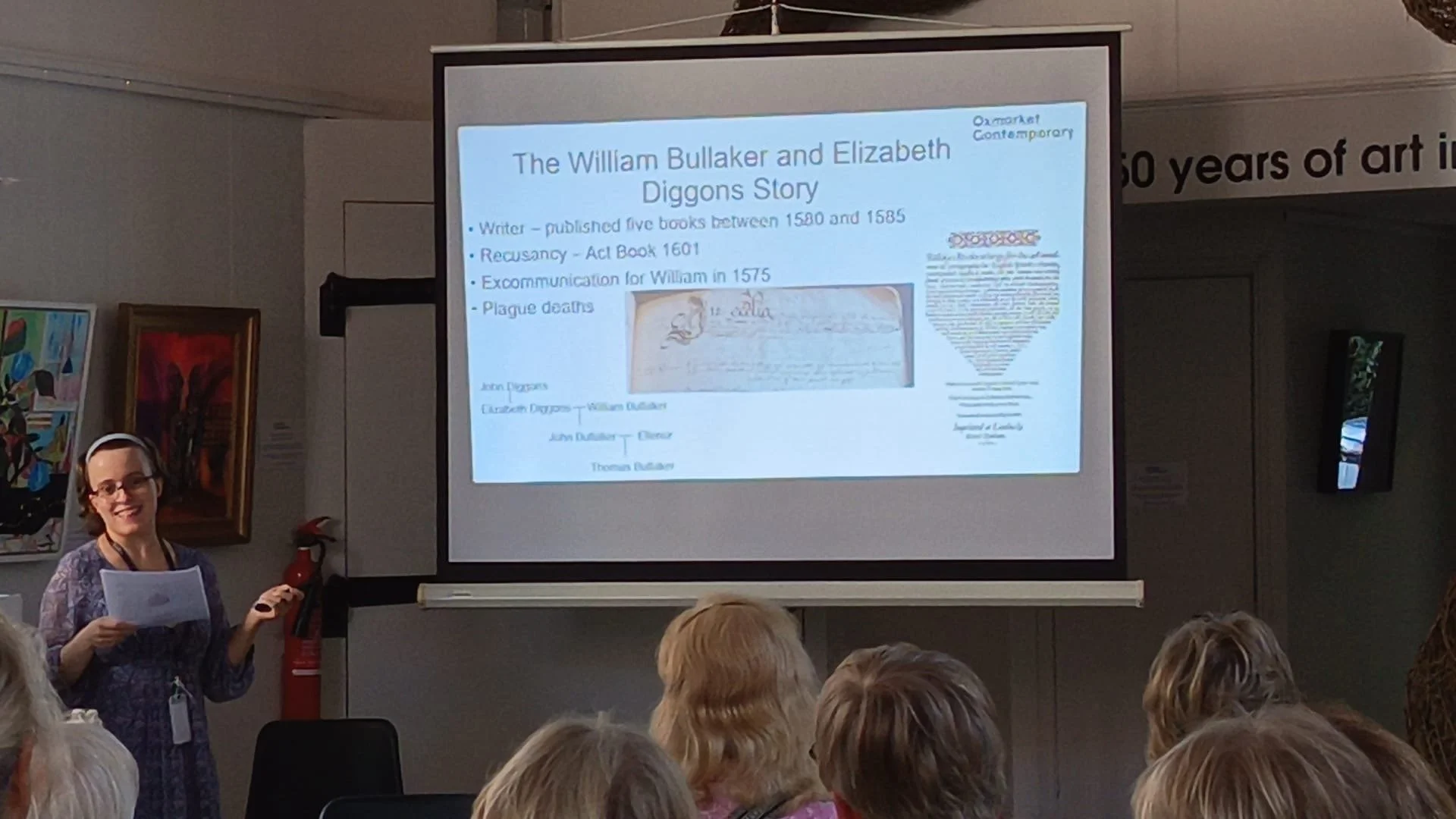
Photograph of Oxmarket historian Rosina during the talk at Oxmarket Contemporary. 2026
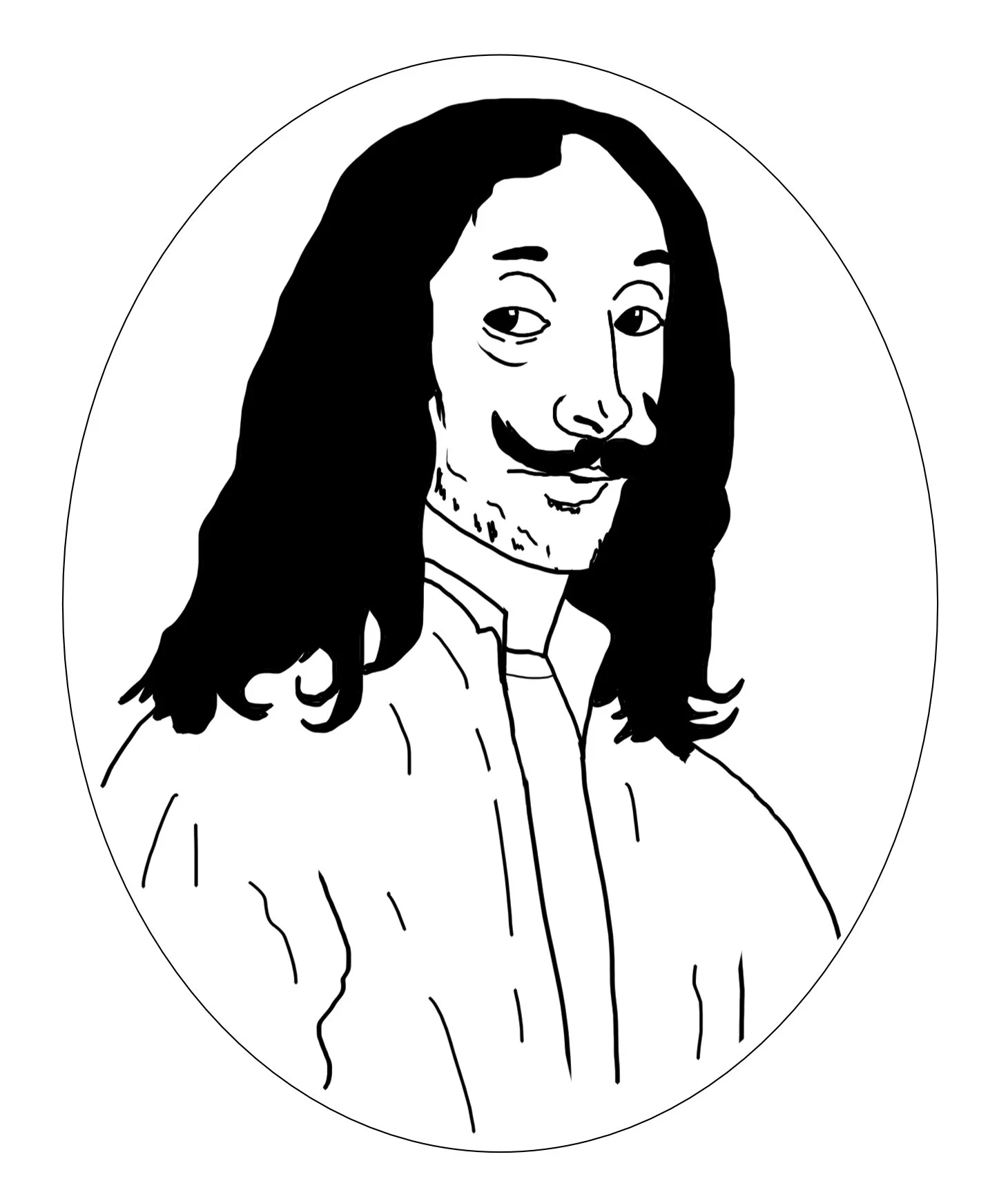
Illustration of Thomas Bullaker by Lauryn Lockyear (2026).
Soun Vannithone: Sketching the Path from Dream to Reality - Rosina Pocknell
Background
Laotian artist Soun Vannithone arrived in Britain with his family in around 1979 from a refugee camp in Thailand where he had spent eight months. He had previously fled from Vietnam with his wife, two children and brother-in-law across the Mekong River to Thailand.
In Britain, Soun and his family firstly stayed with Alan Davison, the former British Ambassador in Laos at his home in Chelsea. Later, Soun and his family were resettled in Worthing. Soun initially became a house painter, and continued with his art in the evenings, but he was later able to become a full-time artist due to his increasing artistic success.
Mediums and Work
Soun works in watercolours, oil, and ink and depicts everything from cooking utensils to the traditional stilted houses in paddy fields near the Laotian capital of Vientiane. Food and cookery writer Elizabeth David commissioned Soun to do a drawing of one of her favourite cookery implements. Soun also undertook a series of illustrations for the Oxford Companion to Food and he was commissioned to produce artwork by the House of Commons.
Soun has done illustration work for book publishers Heinemann. His illustrations can be found in Simon Winchester’s books Krakatoa: The Day the World Exploded, and The Map that Changed the World: William Smith & the Birth of Modern Geology. Soun also illustrated Josephine Bacon’s books Exotic Fruits A-Z, and Exotic Vegetables A-Z. Soun won the first Worthing Award silver salver for his contribution towards publicising Worthing through exhibitions of his paintings in 1980.
Exhibitions
In 1981, Soun’s artwork featured in the Vietnamese Boat People exhibition at Oxmarket Contemporary (then Chichester Centre of Arts). During our 50th Retrospective exhibition, multimedia artist Karen Ongley-Snook kindly donated a couple of Soun’s artworks, which she had bought from the 1981 exhibition, to help raise money for the gallery.
Soun has also exhibited at the Commonwealth Institute in South Kensington, Broughton House Gallery in Cambridge, and the former Claydon Gallery in Worthing. Soun’s work was celebrated during Laos Art Week 2025 in the Parkson Supermarket in Laos, who quoted Soun as saying that he uses his Rotring pen to sketch the path from dream to reality.
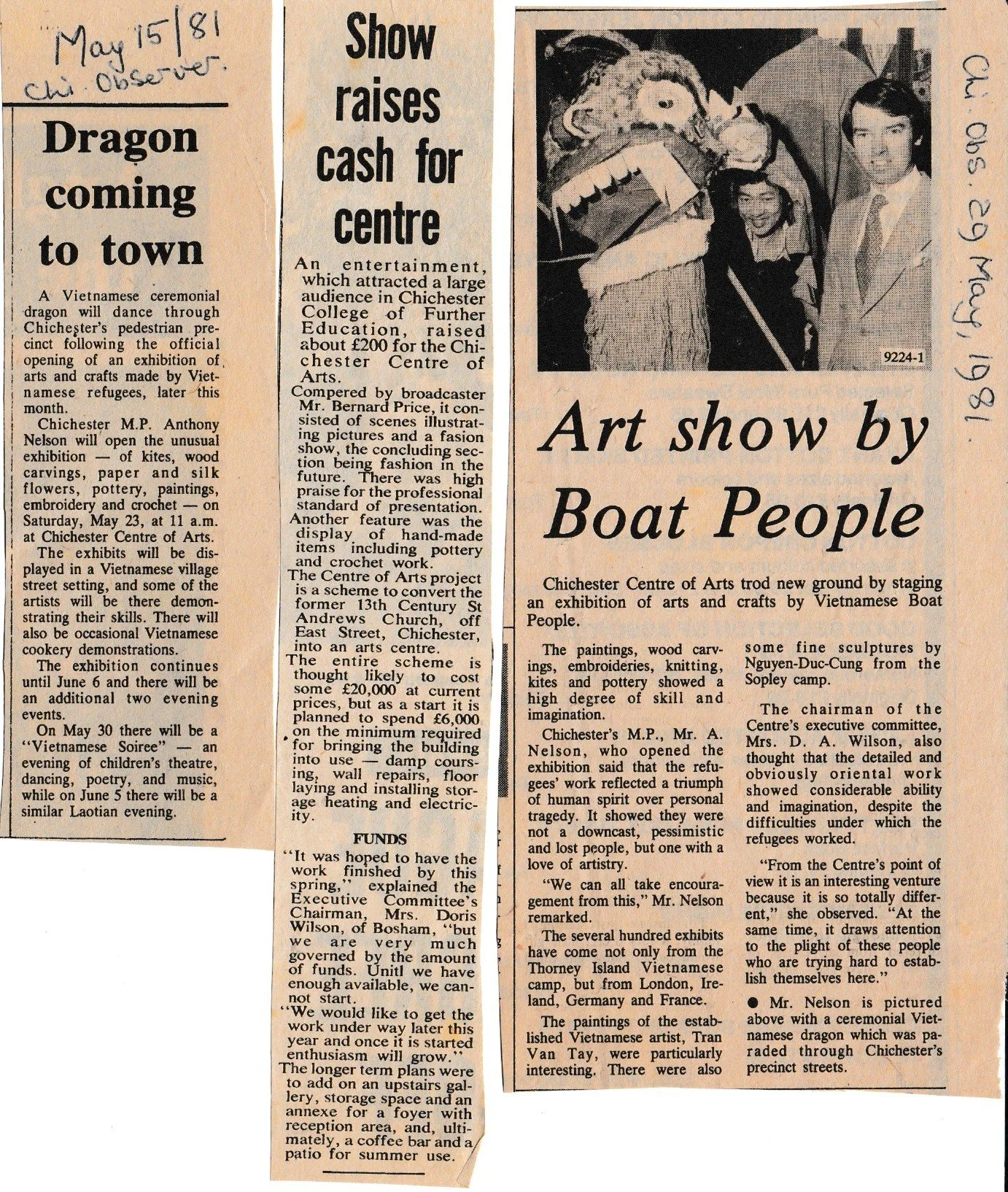
Newspaper clippings about the Vietnamese Boat People Exhibition from Oxmarket Archives (1981).
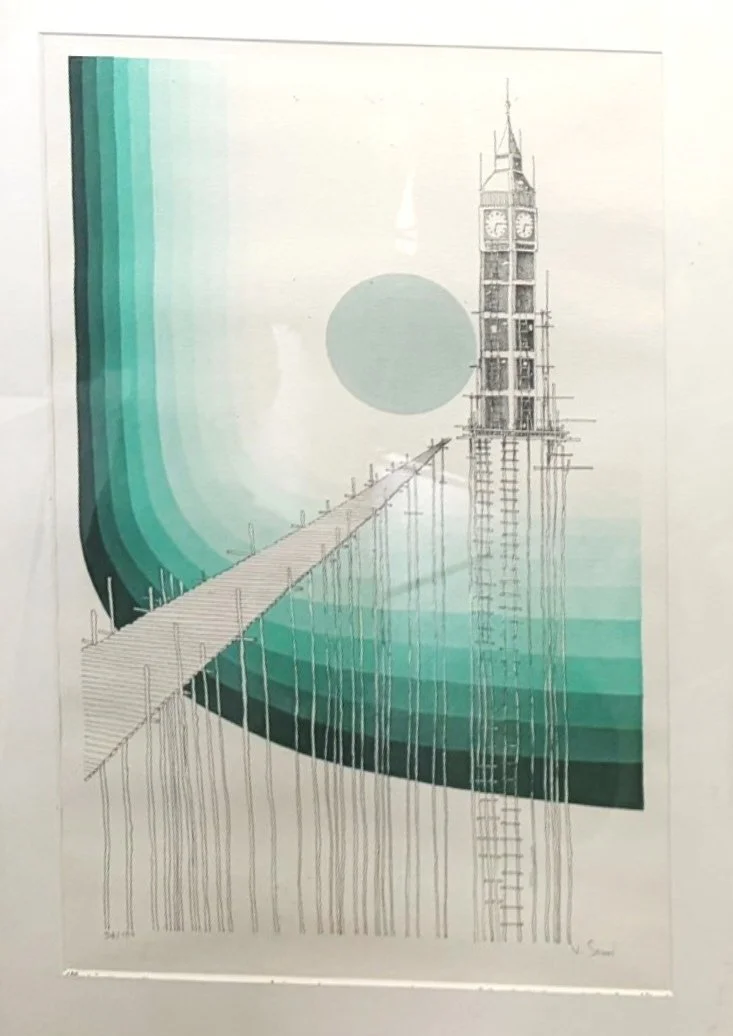
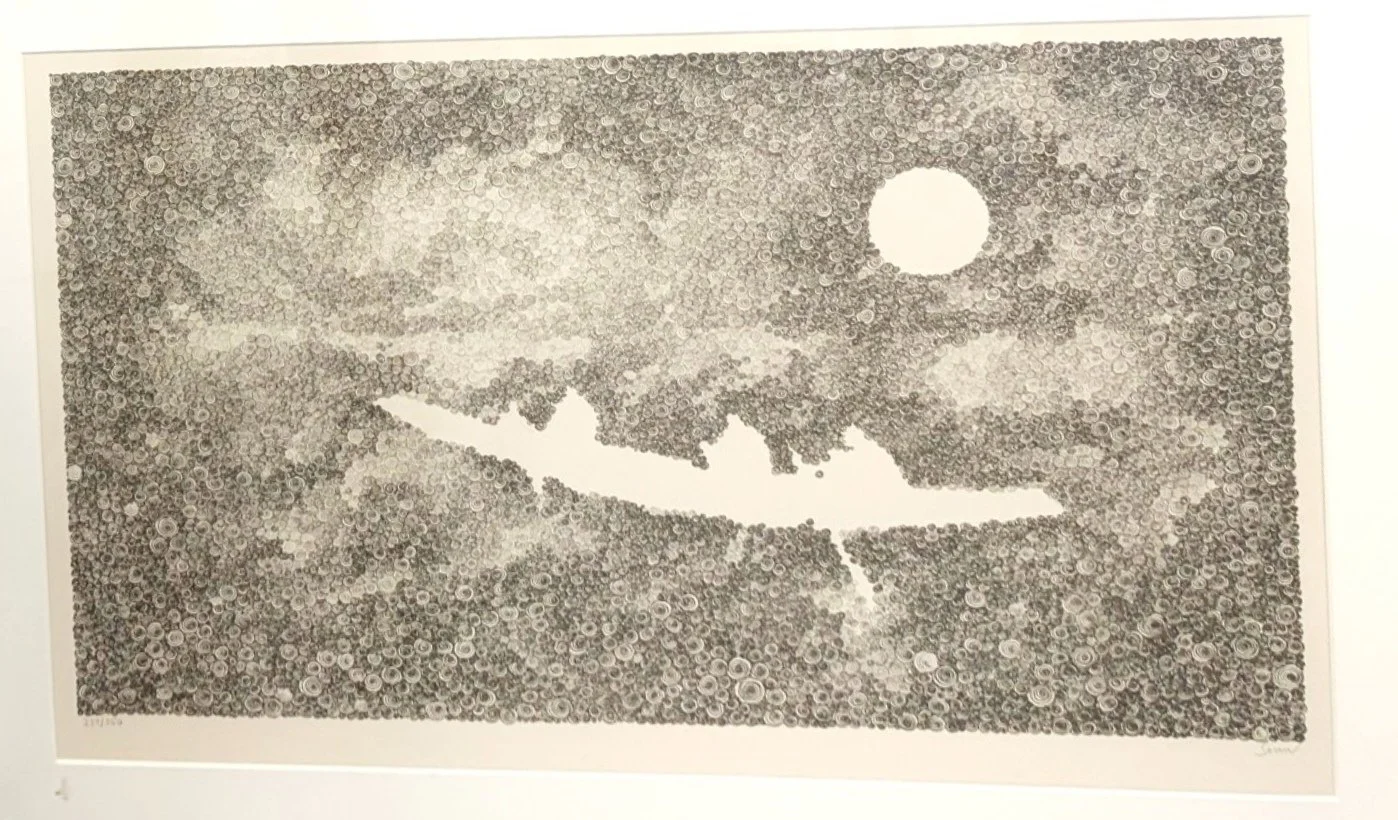
Soun Vannithone’s artworks at Oxmarket Contemporary’s 50th Retrospective Exhibition (2026).
The Oxen Project with Hauz of Green
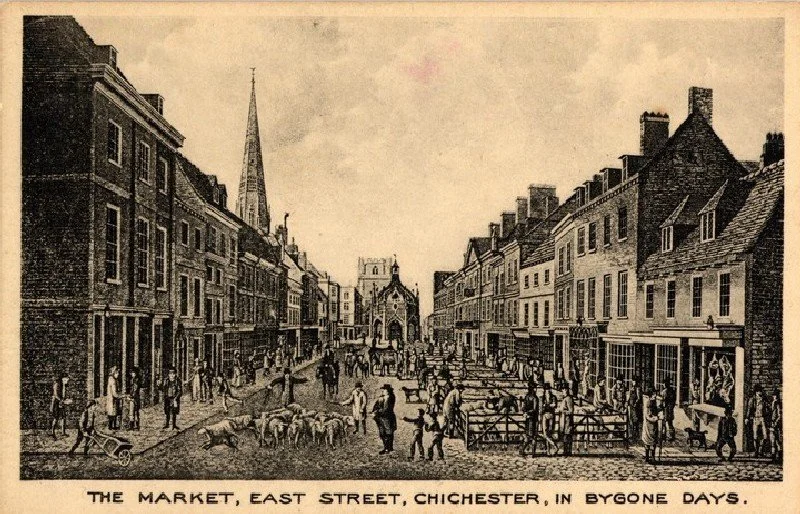
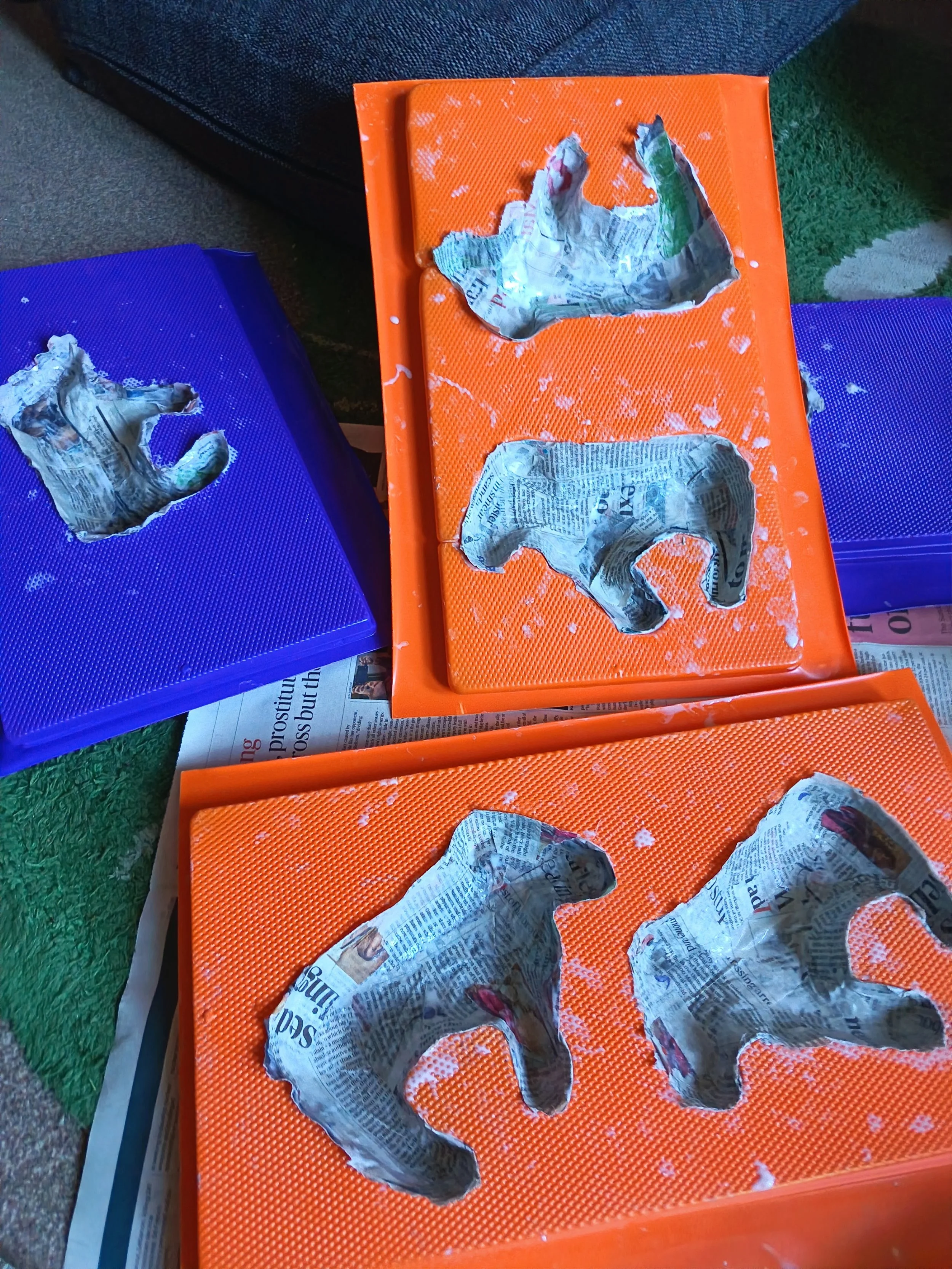
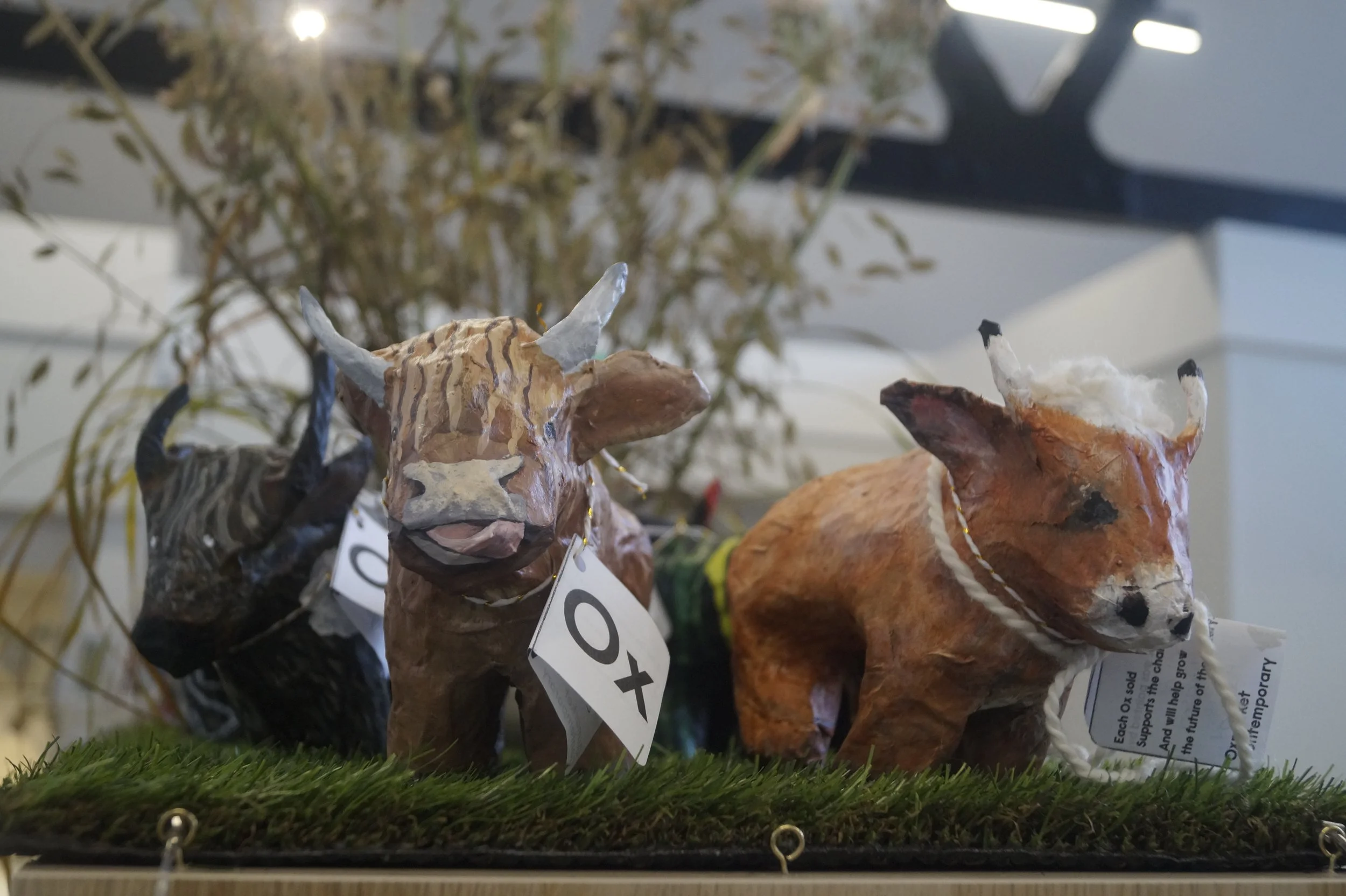
Illustration of East Street Market in Chichester
Moulds of Oxen halves
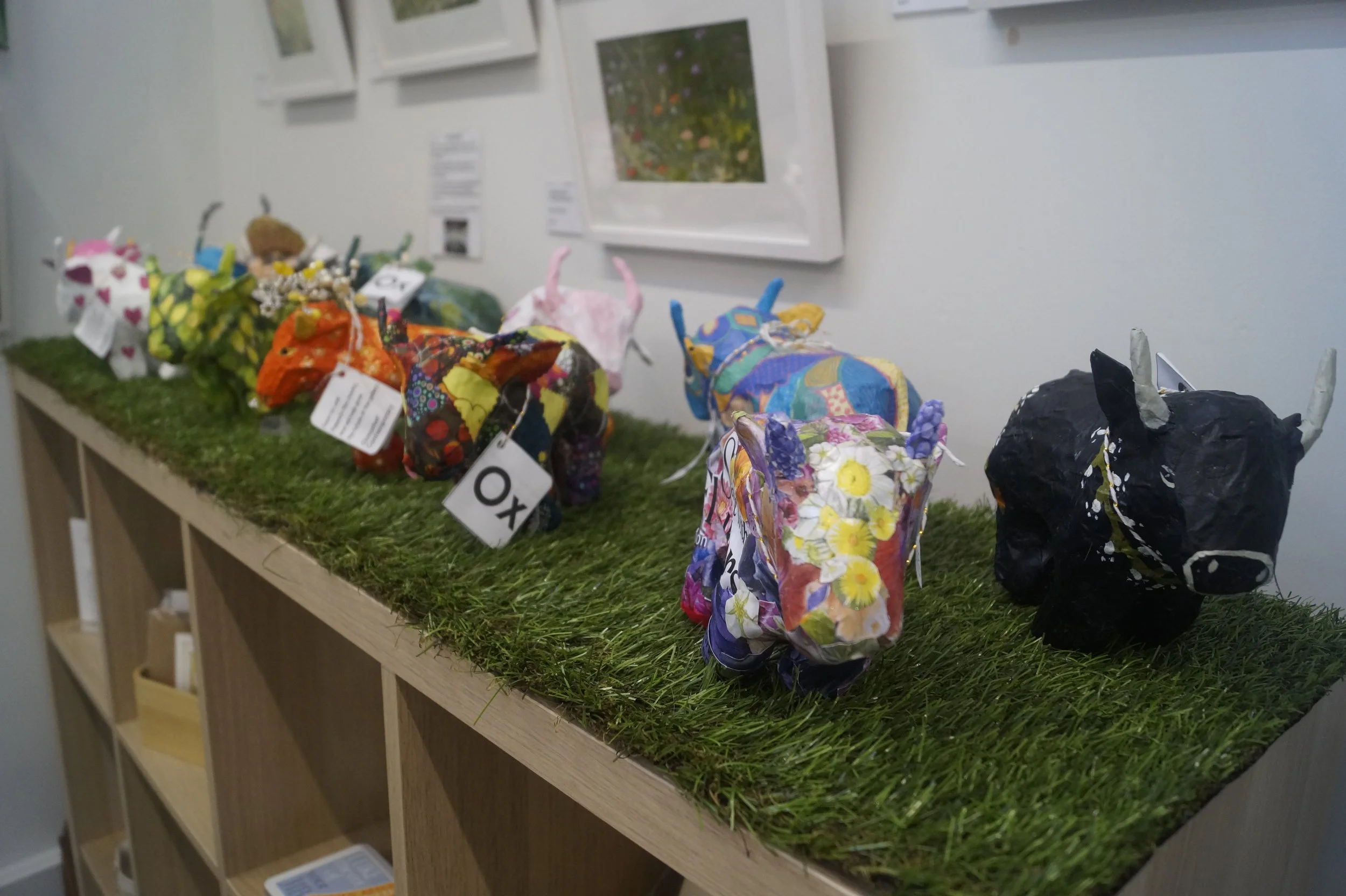
Painted Oxen on display in the gallery shop
The Oxmarket gets the animal part of its name from the nearby Beast Market, which was held in East Street before the market moved to the Cattle Market in the 1870s.
When pondering fundraising ideas for celebrating fifty years of Oxmarket Contemporary, artist and Gallery Coordinator Lauryn decided to create small papier mâche oxen for artists with links to the Oxmarket to decorate and sell. Below is Lauryn’s description of the processes that went into the creation of these oxen:
“Papier-mâché is a medium I was already familiar with, and I thought it would be very suitable for the project, being cost effective and eco-friendly. Because of the scale needed for the project, I was lucky to be able to create plastic moulds from one original clay sculpt (thanks to Chichester Uni Fine Art department) of an Ox, using a vacuum former. This allowed me to be able to create multi ‘sculpts’ at a time, which became very handy as the process broke down into three main parts.
First was creating the halves. I had 8 moulds, which equalled x4 oxen in whole. Once the bases were dry, I then would attach 2 of the halves together and fill with old paper packing and magazines. Then sealed with masking tape, and another layer of papier-mâché applied. This created a full 3D oxen base, but one last layer of papier-mâché was needed, as then the details of ears, tail and horns were added. Once dried, then the Oxen would be ready for painting.
A big thank you to all the artists who took their time to collaborate and paint for this project (in no particular order):
Kate Thorpe, Oscar Romp, Jazmine Saunders, Louise Duggan, Gael Emmett, Pat Tempest, Karen Ongley-Snook, Sheryl Pape, Jo Flatt, Frank Jenning, Ellie Sheil, Jo Shapiro, Colin Merrin, Sandra Izard, Jo Duncan-Smith, Chrissie Matson, Ellie Philpot, Fiona Bell Currie, Gemma Bedford, Jane Eastell, Allan ‘Skip’ Davies, Vikki Hibbert, Linda Foskett, Lynn Nichols, Marie Monro, Martin Smith, Maureen Brigden, Min Maude, Paula Chuter Baker, Sam McGann, Sue England, Tanya Telford, Mike Crouch, Jesse Harman, Betty Hibbert, Bec Hopkins, Jill Boggiss, Isobel Dodson, Liz Ganney, Penny Bicknell, Rosemary Pocock, Deborah Hochreutener, Nicole Phillips, Sarah MacLaughlin, Anne Graham, Helen Vangrove, Susanne Haines, and Stephen Codner.”
For full breakdown of the project and processes, visit @HauzofGreen on Instagram.